Electrical Transition Joints (ETJ) play a critical role in establishing effective, durable, and stable connections between dissimilar metals.
In many industrial structures and installations, there is a need to join aluminum to steel or other metals, where traditional joining methods can lead to increased electrical resistance, corrosion, or reduced system lifespan. This is where ETJs emerge as an engineered and efficient solution.
These joints are manufactured using advanced Explosion Bonding technology,
which creates an exceptionally strong and uniform bond between two different metals without compromising their metallurgical structure or properties. This technology provides both mechanical and electrical connectivity, offering high resistance to thermal shocks, corrosion, and severe mechanical loads.
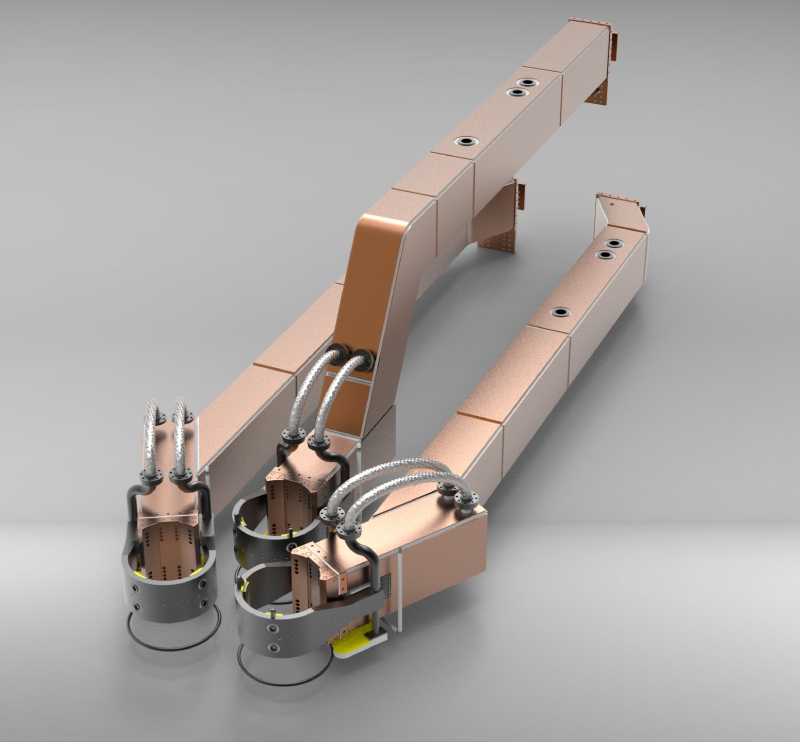
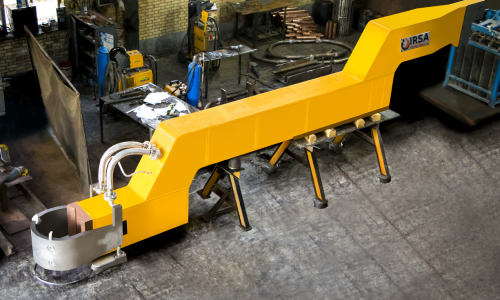
One of the key applications of ETJs in the steel industry is in connecting steel arms to aluminum conductors in power transmission structures, power plants, and petrochemical equipment. Aluminum is often used due to its lightweight and excellent conductivity; however, joining it securely to steel structures presents challenges that ETJs are designed to overcome. These joints are extensively used in bridge arms, towers, transmission lines, and grounding systems, ensuring efficient current transfer with minimal losses and maintaining system integrity.
Additional advantages of ETJs include reduced electrical contact resistance, prevention of galvanic corrosion between metals, extended service life, and minimized maintenance requirements. Moreover, the customizable nature of ETJs allows their design to be tailored to meet the specific needs of various industrial projects and environmental conditions.